
The obsession with lines outside restaurants (Asia edition)
How Queues Became The Region’s Most Reliable Marketing Channel And Why We Keep Falling For It
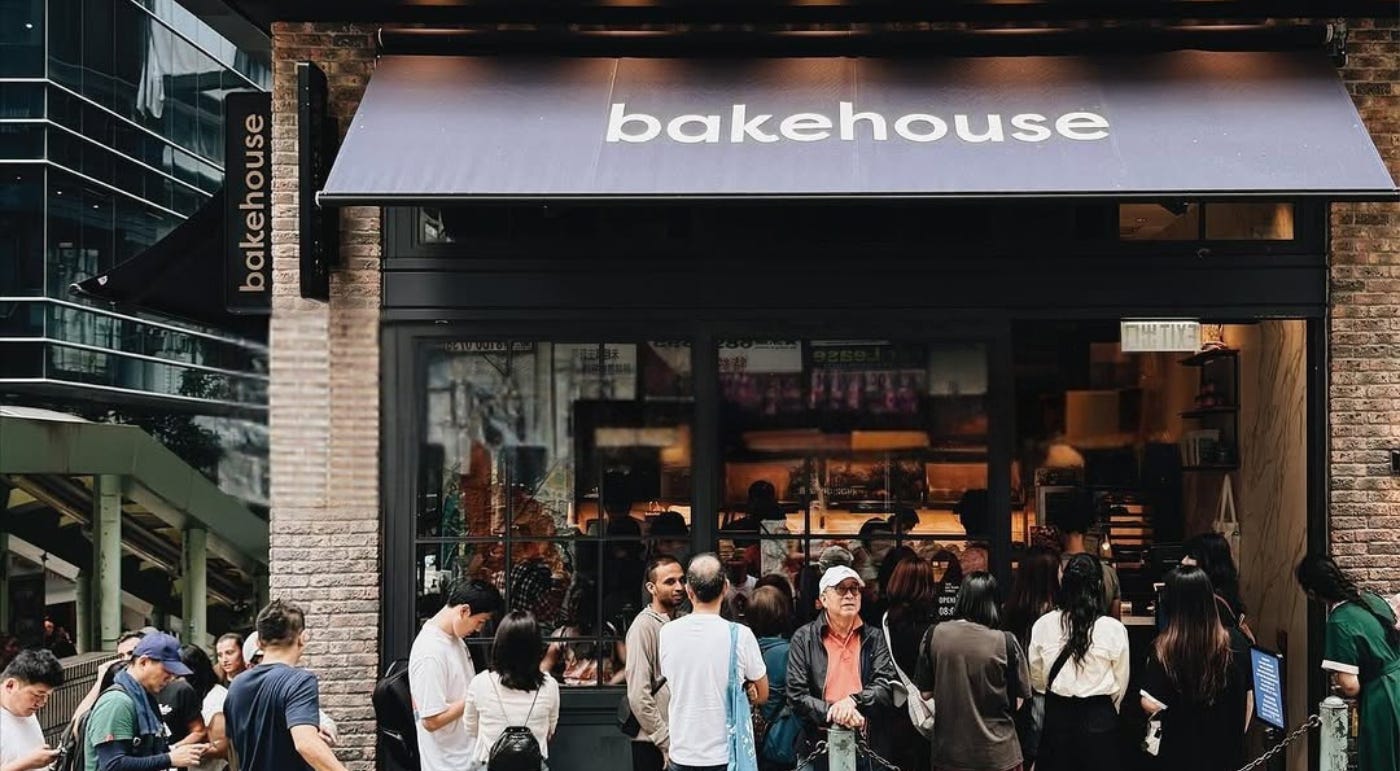
At 7:15 a.m., outside Bakehouse in Hong Kong, a line forms that resembles a pilgrimage.
No one is guaranteed an egg tart.
No one is promised efficiency.
Yet there they stand, hopeful and caffeine deprived, convinced that whatever Bakehouse pulls out of its ovens this morning will justify the wait.
The irony is simple. The line is not a malfunction in the system.
In Asia, the line is part of the experience.
Perhaps not invented here, but certainly perfected here.
THE SETUP: WHY ASIA TREATS LINES LIKE MICHELIN SIGNALS FOR FREE
In many Western cities, a long queue can feel like friction or poor planning.
In Asia, it often communicates something entirely different: competence, care, and culinary promise.
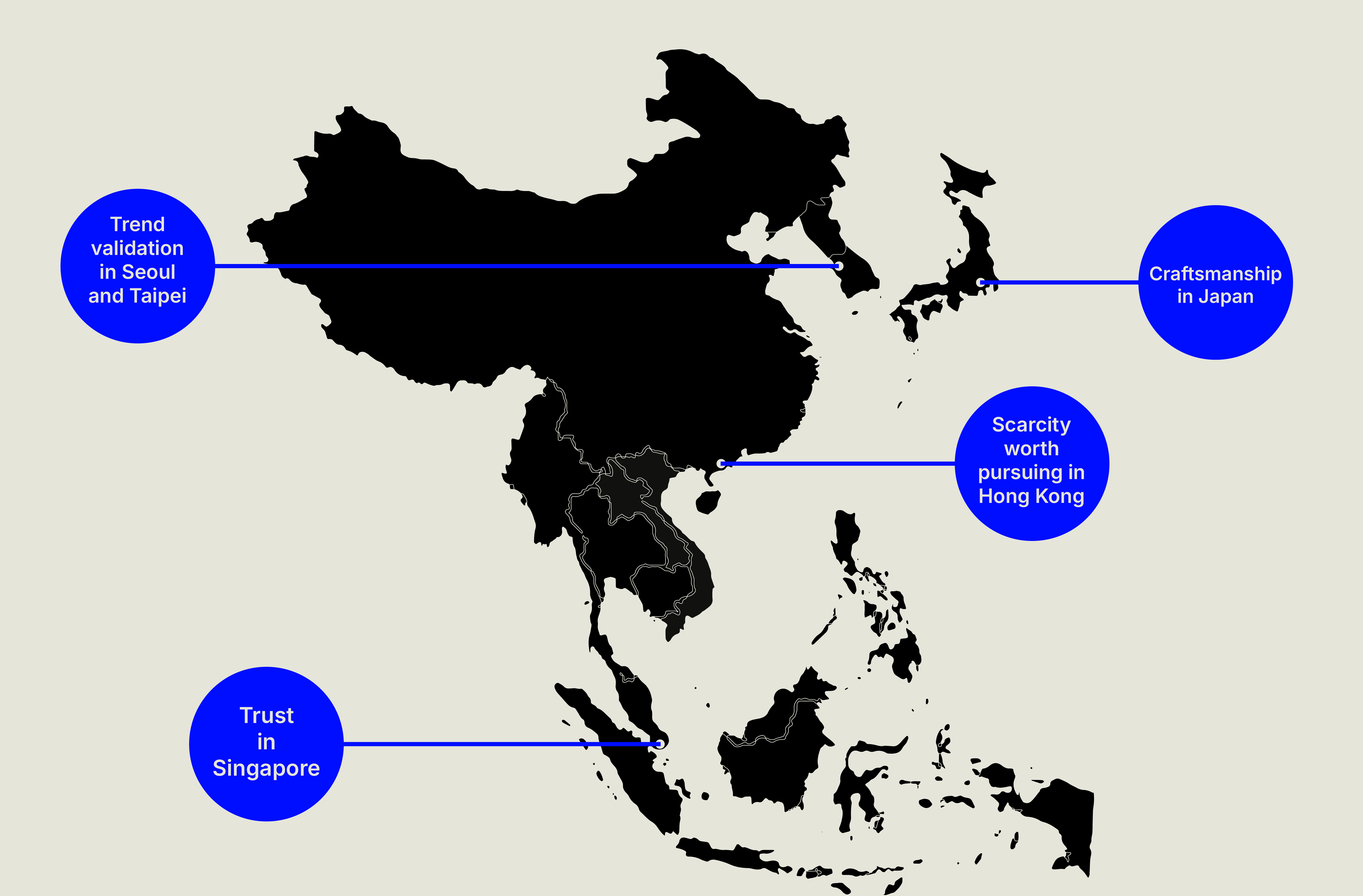
A line outside a restaurant acts like social underwriting.
It tells passersby that the crowd knows something worth knowing.
And that collective belief is potent enough to bend streets around storefronts.
THE LINE AS THEATRE
Most restaurants did not intend to become landmarks of waiting. Their tight interiors are usually byproducts of rent pressure, heritage buildings, or neighborhood constraints.
But when demand surpasses capacity, the line becomes a visual declaration.
An unplanned billboard.
A public endorsement.
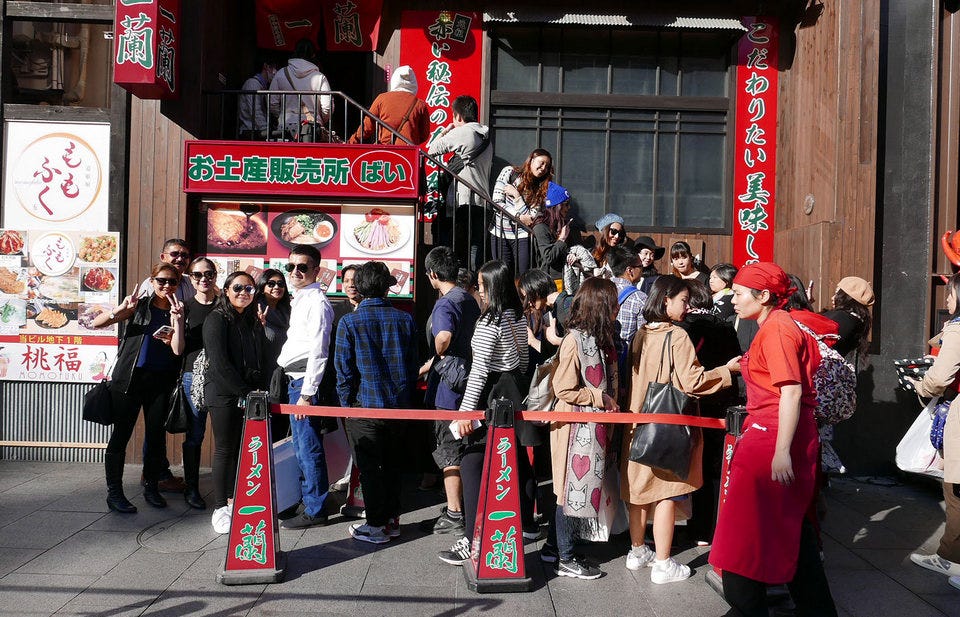
Consider Asia’s most photographed queues:
Bakehouse in Hong Kong with timed pastry drops and a near-mythical egg tart
Din Tai Fung in Taipei (and worldwide) where the kitchen runs like choreography
Tim Ho Wan in Hong Kong fueled by a Michelin star and global curiosity
Ichiran and Tsuta in Tokyo where ramen borders on engineering
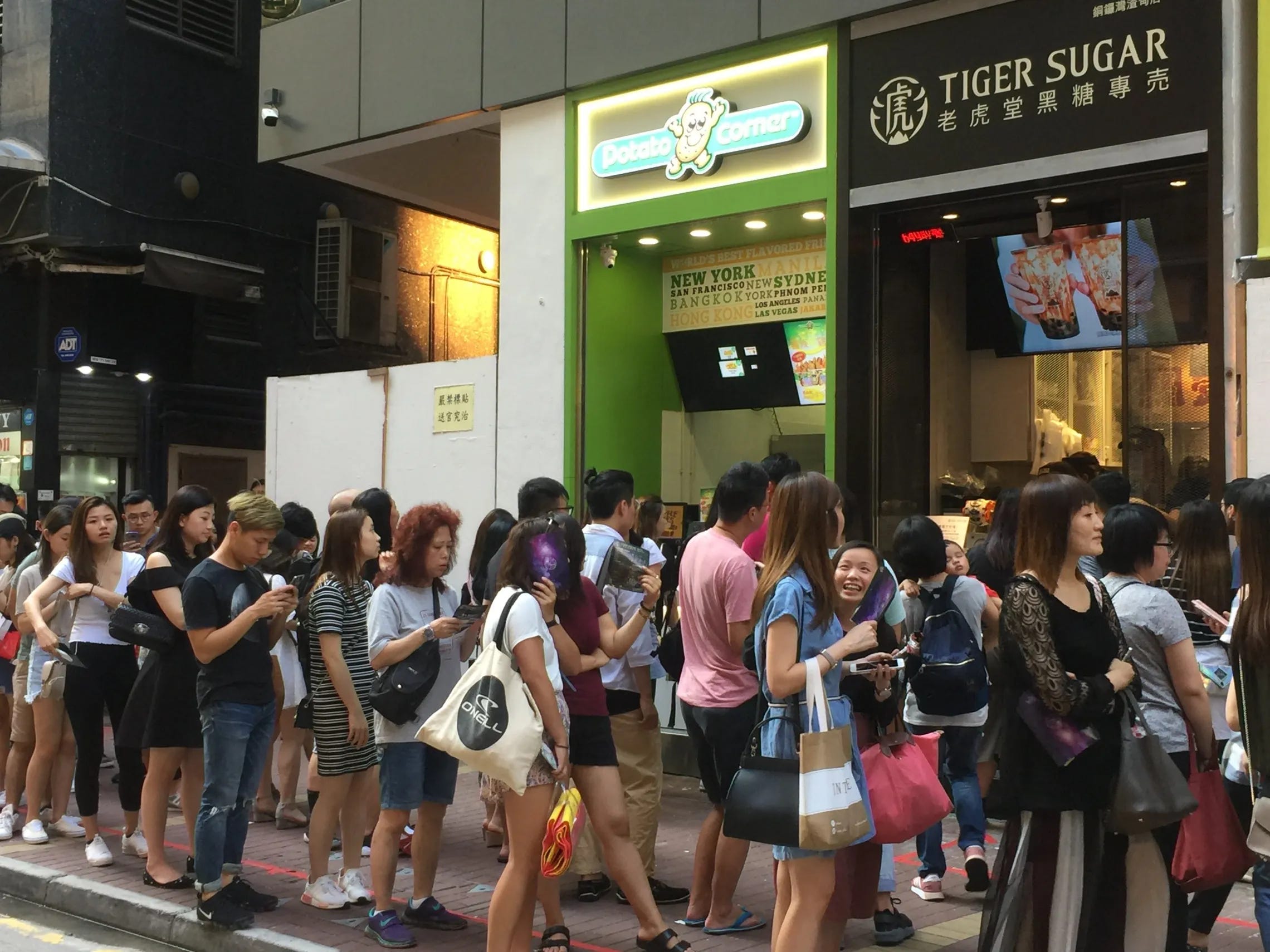
Tiger Sugar in Taiwan with its boba spectacle
Seoul’s bakery wave driven by restless culinary experimentation
What draws people here is not the size of the room but the certainty of what arrives on the plate. The line outside is just the visible trace of that reputation.
WHY QUEUE CULTURE EXPLODED IN ASIA RECENTLY
If lines have always existed, they have multiplied dramatically over the past few years. Several forces accelerated the shift:
The sidewalk quietly became Asia’s most consistent discovery engine.
ASIA’S QUEUE PSYCHOLOGY: FACTUAL, NOT FANTASY
1. Japan: Queues As Respect
Japan’s lines are an extension of the kitchen. A sign of mastery, not hype.
When a chef has spent decades refining broth or technique, waiting becomes a gesture of appreciation.
Examples abound:
Sushi Dai at Toyosu
Nakiryu’s Michelin recognized ramen
Ichiran’s original Fukuoka counter
Gyukatsu Motomura in Shibuya
Fluffy pancake cafes with near religious followings
These lines speak softly but carry authority.
2. Hong Kong: Queues As Scarcity Reality
In a city where space is a luxury, limited capacity is unavoidable.
Bakehouse never set out to create a spectacle. The city simply showed up faster than the ovens could keep up.
3. Singapore: Queues After Recognition
Hawker Chan did not win its Michelin star because of a crowd.
Craft and consistency earned the award.
The international frenzy, and the hour long lines, followed.
In Singapore, a queue often arrives once the credibility is already secure.
4. South Korea: Trend Acceleration
Korean queue culture grows from a perfect storm:
TikTok and Xiaohongshu
destination neighborhoods like Seongsu dong
influencer ecosystems
rapid seasonal cycles
Korea’s lines are what happen when a trend hungry culture meets a hyper connected generation.
5. Taiwan: Queues As Living Reviews
Night markets, boba shops, bakeries.
Taiwan treats lines as indicators of trust, particularly in tourist dense areas.
THE REAL DRIVERS: PRODUCT, BRAND, AND THE CHEF
The most persistent myth in food culture is that a small dining room creates a line.
Crowds gather for craft, not floorplans.
There are three forces behind every durable queue.
1. PRODUCT: THE NON NEGOTIABLE
A long wait can only survive if the first bite earns it.
Examples include:
Bakehouse’s sourdough egg tart
Din Tai Fung’s xiao long bao, delivered with astonishing uniformity
Tim Ho Wan’s baked BBQ pork bun
Ichiran’s single focus ramen
Korean pastries that sell out in hours
Taiwanese night market classics refined by generations
If the product falters, the line fades.
2. BRAND: MEANING, NOT MARKETING
These restaurants do not rely on visual identity solely. Their identity is revealed through behavior.
Din Tai Fung
Predictability becomes an art form. You queue because you trust the outcome.
Bakehouse
A morning ritual built around the anticipation of fresh batches.
Tim Ho Wan
Craft and value in the same breath create global magnetism.
Ichiran
Solitude becomes philosophy. The queue is the quiet threshold to an intimate experience.
A brand lives in the expectation that draws people to the door, not in the typography above it.
3. CHEF OR FOUNDER AS TRUST ANCHOR
Asia has a particular fondness for culinary guardians.
Grégoire Michaud at Bakehouse
Yang Bing Yi at Din Tai Fung
Mak Kwai Pui at Tim Ho Wan
Tokyo’s ramen masters
Fourth wave Korean bakers
Night market vendors in Taiwan whose reputations span decades
Here, the chef is the guarantee. The room matters far less than the person whose craft fills it.
WHY PEOPLE LOVE TO HATE QUEUE RESTAURANTS
Backlash is part of the lifecycle.
A restaurant is not truly famous until someone calls it overrated.
Why the resentment?
The overhype reflex. Declaring something overrated feels like insider knowledge.
Early adopter gatekeeping. Once a place becomes mainstream, the original fans retreat.
Value auditing. Every bite is measured more harshly after a long wait.
Influencer fatigue. Viral attention invites skepticism.
Authenticity debates. Taste becomes competitive, almost territorial.
The good news is - Hate does not always signal decline. Sometimes it signals arrival.
THE INFLUENCER QUEUE PIPELINE
Influencers amplify queues. They do not create them.
TikTok magnifies sensory appeal
Instagram builds visual desire
Xiaohongshu directs tourism
Google Maps reinforces credibility
Poor restaurants cannot sustain lines.
Strong ones cannot escape them.
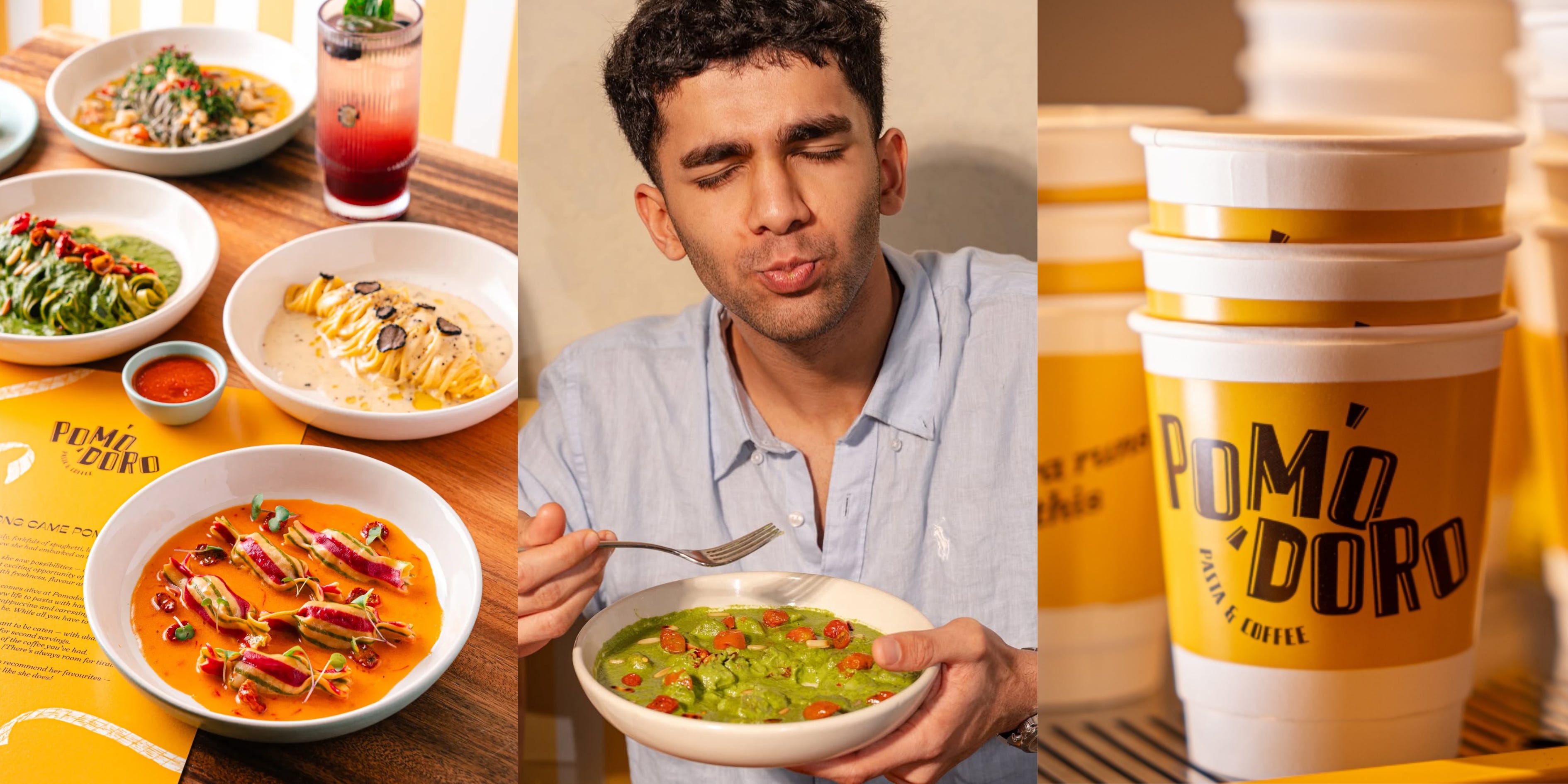
CASE STUDY: POMODORO (MUMBAI)
How A 22 Seater Built A Citywide Ritual From Fresh Dough And Honest Strategy
When Rare Ideas worked with Pomodoro, the brief was deceptively simple.
Take pasta, a dish available on every menu in the city, and make it matter.
So how does a tiny space in Bandra build a city-wide pilgrimage pattern for a product the market considers “standard fare”?
By doing the one thing almost nobody else was willing to do:
Owning the category by elevating the basics.
Not reinventing them.
Not over-complicating them.
Just… doing them properly, and communicating it with clarity.
Pomodoro’s answer was to elevate fundamentals.
The Product
Fresh dough rolled daily by hand
Durum wheat with no shortcuts
Ingredient first cooking
Live pasta making that diners could witness
Recipes anchored in Italian correctness
The Narrative
Rare Ideas’ strategy was to build authentic category ownership for Pomodoro.
The story wasn’t:
“We’re the first to make pasta in Mumbai.” (They’re not.)
“We’re reinventing Italian cuisine.” (Thank God, no.)
“We’re fusion with a twist.” (Absolutely not.)
The real narrative, the one diners felt in their bones, was:
“This is how Italians make pasta: fresh, simple, disciplined.
And we’re not diluting that.”
That’s category leadership built on truth.
The Experience
Its 22 seat space created intimacy. Guests did not just taste the dish. They witnessed its creation.
The Strategy
Rare Ideas shaped the language around what already existed.
Codified the craft forward philosophy
Positioned Pomodoro as the benchmark for Italian correctness
Turned live pasta making into a part of the dining experience and brand narrative
Framed fresh pasta as the category standard
Over time, Pomodoro’s regulars multiplied, and the small queue outside turned into a quiet ritual of appreciation for work done well.
WHICH COUNTRY HAS THE STRONGEST LINE CULTURE IN ASIA
Japan, without question.
Queues there are ritualized and deeply respected. They reflect appreciation, not impatience.
Examples include:
Sushi Dai at Toyosu
Gyukatsu Motomura
Nakiryu and Tsuta
The original Ichiran in Fukuoka
Kissaten style cafes with limited counter seats
These lines are orderly, silent, and self regulated.
In Japan, a line often reflects admiration for the craft rather than a tactic to draw attention.
STRATEGY DISORDER TAKEAWAY: THE SIDEWALK AS CEREMONY
Asia does not queue for the sake of inconvenience.
It queues because food is identity, mastery commands patience, and craft deserves attention.
Bakehouse. Din Tai Fung. Tim Ho Wan. Ichiran. Tsuta. Tiger Sugar.
Different cities. Different traditions. Same gravitational pull.
Across Asia, the restaurants that stay relevant are shaped by meticulous kitchens, craft driven founders, and stories that travel faster than their seating capacity ever could.
As long as the food delivers on the promise, the line will always be worth it.
Involuntarily drew parallels betwixt cultures of queueing vs rushing/ crowding which is an oft witnessed phenomenon closer to home (south asia vs south east asia). Thinking (and craving) Garden Vada Pav.
Also, establishments like Naru or Papa's Bombay or even recent trendsetters of curated dinner parties/ micro fine dining, have built a layer of scarcity on top of this and that is a force multiplier too. Interesting piece.